 MK
MK  PT
PT  ES
ES  IT
IT  EN
EN 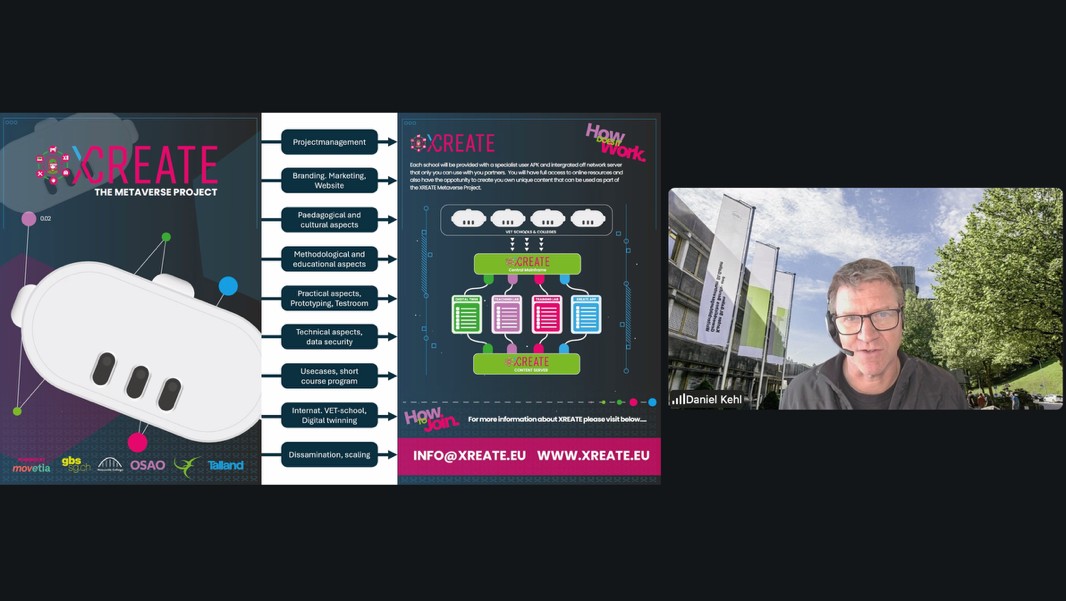
Digitalising laboratories and VET centres: a European perspective
The European Focus Group by Lab of the Future brought together experts, practitioners and trainers to explore how laboratories and vocational education and training (VET) centres can navigate digitalization, while ensuring sustainability, quality and inclusion. Organised online, on 26 March by the European Forum of Technical and Vocational Education and Training (EfVET) and EUROLAB, the online event opened with an introduction on the Lab of the Future project, highlighting its objectives, deliverables and target audience. Two contributions from the world of laboratories and VET centres set the stage for the further exchange and discussions.
Damiano Pietri, President of Metricode, presented the smart digital and sustainable strategies integrated within the laboratories ABC Bilance and Metricode, focusing on the key digitalisation practices and innovative actions. He pointed out that sustainability should be incorporated not as a single dimension, but as a holistic model integrated in all aspects of the laboratory. Moreover, he argued that the Industry 5.0 elements to embed in lab practices should be: sustainability, resilience and human capabilities. In laboratories, various smart digital practices have been integrated, including paper elimination, digital approvals, secure sharing of data and documents and e-Smart technologies.
Daniel Kehl, principal at the VET centre GBS St. Gallen, examined the role of immersive technologies through the XCreate project, which aims to build a virtual VET campus in the metaverse. By creating digital twins of learning environments, the project enables students from different countries to collaborate in interactive and gamified experiences. He underlined that, while the potential of virtual and augmented reality is significant for personalized teaching and inclusion, challenges persist. Digitalisation in VET centres entails high costs, time-consuming practices, complex onboarding for teachers and learners and forced collaboration with other organization to make practices sustainable in the long run. The discussion underlined the importance of clear strategies, sustainable investment models and open-source solutions.
The exchange as part of the Focus Group saw the online participation of lab practitioners and VET trainers, among others, who were at first asked to assess their own institutions’ level of digital maturity. Most identified themselves at an early or developing stage of digitalisation. Commonly used tools include Enterprise Resource Planning (ERP) systems, Laboratory Information Management Systems (LIMS), AI applications, electronic records, CRM systems, and, to a lesser extent, virtual reality (VR) and extended reality (XR) technologies. Despite these advancements, only a limited number of institutions reported having a comprehensive digitalisation strategy in place, often focused on transitioning towards paperless processes and improving data management.
Further discussions highlighted several key barriers to digitalisation: limited funding, skills gaps, interoperability issues, resistance to change within institution’s culture and infrastructural constraints. In order to address them, participants proposed to:
- Develop clear organisational strategies and action plans for digitalisation
- Increase financial investment and allocate dedicated time for digital transformation
- Ensure tools are user-friendly, integrated and inclusive
- Strengthen staff engagement and continuous training
- Promote standardisation through shared methodologies
Most importantly, digitalisation must remain human-centred, supporting lab practitioners, VET learners and educators while fostering inclusion. Participants emphasised the crucial role of the European Union in accelerating digitalisation through programmes, funding and flagship initiatives. Against this backdrop, recommendations included increased support for infrastructure, stronger policy frameworks and enhanced collaboration between VET providers and industry. Participants argued that EU programmes such as Erasmus+ are pivotal for the digital transformation, and should prioritise long-term, sustainable innovation, invest in digital and AI skills for educators and maintain a strong focus on the human dimension of technological change.
The Focus Group meeting was a successful event, gathering participants from various key sectors, including VET centres, lab technicians, experts in the digitalisation field, academia and European organisations. The high-level engagement of attendees, with expertise and questions shared by participants, as well as the fruitful discussions, led to an important list of takeaways to be further reflected in the project development:
- The relevance of EU-funded actions for digitalisation of labs and VET centres;
- The uniqueness of the VET and labs ecosystems;
- The importance of sustainability and inclusion in conceiving and designing strategies;
- The necessity of focus on the human dimension of digitalisation strategies, to make tools and practices adapted to different settings and personal needs, teachers and trainers’ skills and competences, age and prior knowledge;
- The importance to map existing processes and priorities to meet the needs, size and targets of the specific labs/VET centres.
The results of the Focus Group will serve for the continuation of the Lab of the Future project and feed into the further activities, among others a European Qualifications Framework for digital laboratory technicians and a European Digitalisation Working Group.
Find out more about the Lab of the Future project:
LinkedIn: https://www.linkedin.com/company/lab-of-the-future-eu/
Instagram: https://www.instagram.com/labofthefutureeu/